By Jersey City Dental | August 17, 2026
Losing several teeth affects a lot more than how your smile looks. It can quietly change the structure of your jaw over time, something many patients don’t fully realize until they start researching their replacement options. If you’ve been looking into ways to restore a full arch of missing teeth, you’ve likely come across the All-on-4 implant procedure and wondered how it actually protects the bone underneath. It’s a fair question, and the answer comes down to how implants interact with the jaw compared to older tooth replacement methods.
Why Losing Teeth Leads to Bone Loss?
Your jawbone stays strong and dense because of the constant stimulation it receives from tooth roots during chewing. When a tooth is lost and never replaced with something that reaches down into the bone, that stimulation disappears. Without it, the body naturally begins to resorb, or break down, the bone in that area, since it’s no longer being used the way it once was. Over months and years, this can lead to a visibly sunken jawline, a shorter lower face, and even difficulty with denture fit if that’s the direction a patient chose instead.
How Traditional Dentures Fall Short Here
Removable dentures rest on top of the gums rather than extending into the jawbone. While they restore appearance and some function, they don’t provide the deep stimulation the bone actually needs to stay strong. In fact, many long-term denture wearers experience continued bone loss over time, which can eventually affect how well the denture fits and feels.
How the All-on-4 Approach Is Different
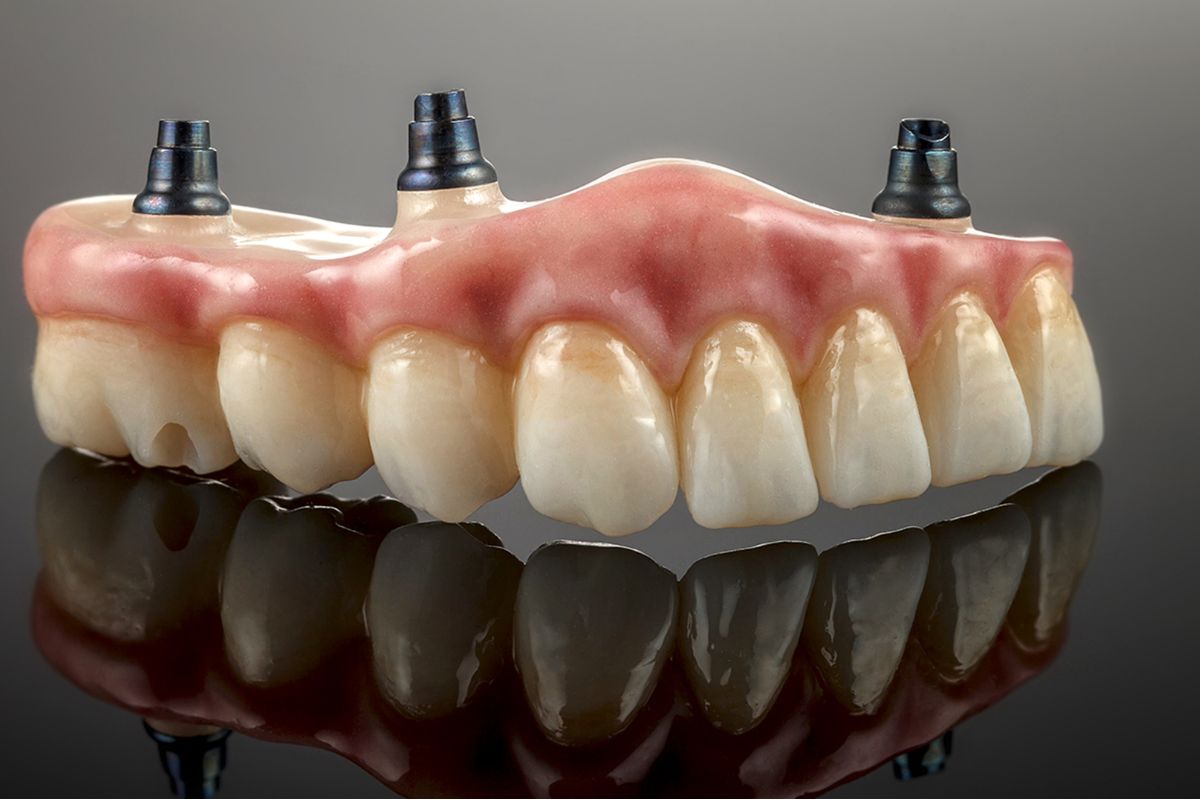
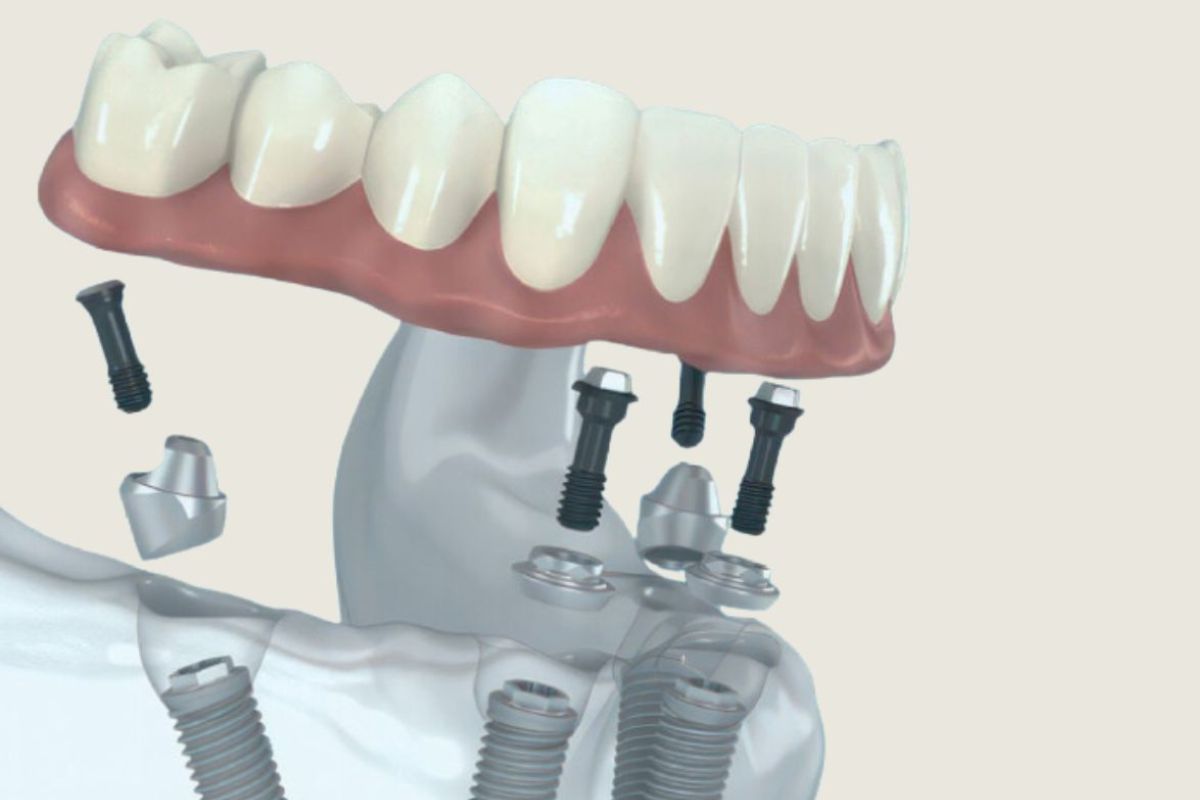
The All-on-4 implant procedure uses four strategically placed implants, two positioned straight and two angled toward the back of the jaw, to support a full arch of replacement teeth. Because these implants are anchored directly into the bone, they provide the same kind of stimulation that natural tooth roots once did. This ongoing stimulation encourages the body to maintain, rather than gradually lose, bone density in the treated area.
Additional Ways This Method Protects Bone Health
- The angled positioning of the posterior implants often allows for strong bone contact without requiring extensive grafting beforehand
- A fixed, implant-supported arch eliminates the pressure and friction that removable dentures can place on the gum tissue
- Patients typically maintain a fuller, more natural facial structure over time compared to those relying on traditional dentures
- Because the implants are secured in the bone rather than resting on the gums, chewing function and stability are significantly improved
Is This Approach Right for Everyone?
Every patient’s situation is different, and factors like current bone volume, overall oral health, and the number of remaining teeth all play a role in determining candidacy. A dental evaluation, including imaging to assess bone structure, is the only reliable way to know whether this approach fits your specific needs. If you’re exploring options for full-arch dental implants in Jersey City, Jersey City Dental can review your imaging and help you understand which treatment path may make the most sense for your needs.
Protect Your Jawbone and Restore Your Smile
Choosing the right full-arch solution isn’t just about appearance; it’s also about protecting the long-term health and structure of your jaw. Our team is ready to walk you through your imaging and help you understand exactly what your bone structure needs. Serving patients throughout Jersey City, NJ, we’re here to help you make a confident, informed decision. Request an appointment today to see whether this approach is right for you.
Frequently Asked Questions
Does losing teeth really affect jawbone shape over time?
Yes, bone that no longer receives stimulation from a tooth root gradually breaks down, which can change facial structure over the years.
Can All-on-4 implants help even if I’ve already lost some bone?
Often, yes. The angled placement used in this approach is specifically designed to work with limited bone volume in many cases.
How is this different from traditional dentures for bone health?
Traditional dentures rest on the gums without stimulating the bone, while implant-supported arches anchor directly into the jaw, helping maintain bone density.
How do I know if I’m a candidate for this procedure?
A dental evaluation with imaging is needed to assess your current bone structure and determine the best treatment path for your situation.