By Jersey City Dental | September 21, 2026
Have you ever finished a meal, only to notice that food has somehow found its way into the exact same spot between two teeth again? You clean it out, feel better for a while, and then the problem happens again the next time you eat. At Jersey City Dental, we understand why this recurring problem can leave you wondering whether something is wrong, especially when it keeps happening between the same two teeth.
Occasional food getting stuck between teeth is normal. However, when it repeatedly happens in one particular area, there may be a reason behind it. A change in the space between your teeth, a cavity, an older filling, gum changes, or even a damaged tooth can sometimes make one area more likely to trap food. Understanding what may be causing it can help you decide when it is simply an inconvenience and when it deserves a closer look.
Why Does Food Keep Getting Stuck in the Same Place?
Every mouth has small spaces between the teeth, and some foods naturally tend to get caught there. Foods such as meat, leafy vegetables, popcorn, seeds, and fibrous fruits can be especially difficult to remove.
The more important question is why the food keeps getting trapped in the same location.
If this has always happened between two particular teeth, the shape or spacing of those teeth may simply make that area more likely to collect food. But if the problem is new, something may have changed. Even a small change in a tooth, filling, or gum tissue can affect how food moves through the area when you chew.
Common Reasons Food Gets Stuck Between the Same Two Teeth
1. There May Be a Cavity Between the Teeth
Cavities are not always painful, particularly when they are developing between two teeth. Because these areas are difficult to see, decay can sometimes progress without an obvious change that you can notice in the mirror.
As a cavity changes the shape of a tooth, it can create a small space or uneven area where food becomes trapped more easily. You may first notice the problem because you suddenly need to floss that particular spot after nearly every meal.
If the area is also sensitive to cold or sweet foods, or you experience discomfort when chewing, it is worth having it examined.
2. An Old Filling May Have Changed
Dental fillings can last for many years, but they do not necessarily remain exactly the same forever. Normal wear, damage, or changes around an older filling can affect the way the restored tooth meets the neighboring tooth.
If food did not used to get stuck in a particular area but now does, an older filling could be one possible explanation. A dentist can examine the filling and the surrounding teeth to determine whether it has changed or needs attention.
3. Your Gums May Have Changed
Healthy gum tissue fits closely around the teeth. When the gums become inflamed or recede, the spaces around the teeth can change.
This may create areas where food and plaque collect more easily. You may also notice redness, swelling, tenderness, or bleeding when cleaning between the teeth.
Food getting stuck is not a diagnosis of gum disease by itself, but recurring food trapping combined with gum changes is a reason to have the area checked.
4. Your Teeth May Have Shifted
Teeth can move gradually over time. Changes in tooth position can alter the amount of space between neighboring teeth and change the way they touch.
As a result, an area that was once easy to clean may become more likely to catch food.
This can happen for different reasons, including natural changes over time or movement after orthodontic treatment. You may not notice the teeth shifting visually, but you can notice the difference when flossing or eating.
5. One of the Teeth May Be Cracked or Damaged
A chipped, worn, or cracked tooth can have an irregular surface that catches food.
If food getting stuck is accompanied by pain when biting, sensitivity, or discomfort around one specific tooth, do not ignore those symptoms. A damaged tooth may need to be examined to determine what is causing the change.
Is It Normal for Food to Get Stuck Between Teeth?
Yes, occasionally getting food stuck between your teeth is normal. The spaces between teeth are naturally designed in a way that allows food particles to enter them, and certain foods are more likely to become trapped.
The concern is when it happens repeatedly in exactly the same place.
For example, if you eat popcorn and occasionally need to floss afterward, there may be nothing unusual about that. But if you find yourself removing food from the same two teeth every day, particularly if this is a recent change, it is worth paying attention to.
Recurring food trapping does not automatically mean that you have a serious dental problem. It simply means there may be something about that area that is making it easier for food to collect.
What Happens If Food Keeps Getting Stuck There?
Food particles that remain between teeth can be difficult to remove with brushing alone. A toothbrush cannot effectively clean every surface between neighboring teeth, which is why cleaning between the teeth is an important part of daily oral hygiene.
When food and plaque remain in one area, the nearby gums may become irritated. Over time, you might notice:
- Red or swollen gums
- Bleeding when flossing
- Tenderness between the teeth
- Bad breath
- Increased sensitivity
- A persistent feeling that something is stuck
The longer an area remains difficult to clean, the harder it can be to keep the surrounding teeth and gums healthy.
How Should You Remove Food From Between Your Teeth?
The simplest approach is usually gentle cleaning between the teeth.
Dental floss can help remove food particles and plaque from areas that a toothbrush cannot reach. Depending on the amount of space between your teeth, an interdental brush or another cleaning aid may also be useful.
Try not to force the floss into your gums or aggressively snap it between the teeth. Gentle movements are less likely to irritate the surrounding tissue.
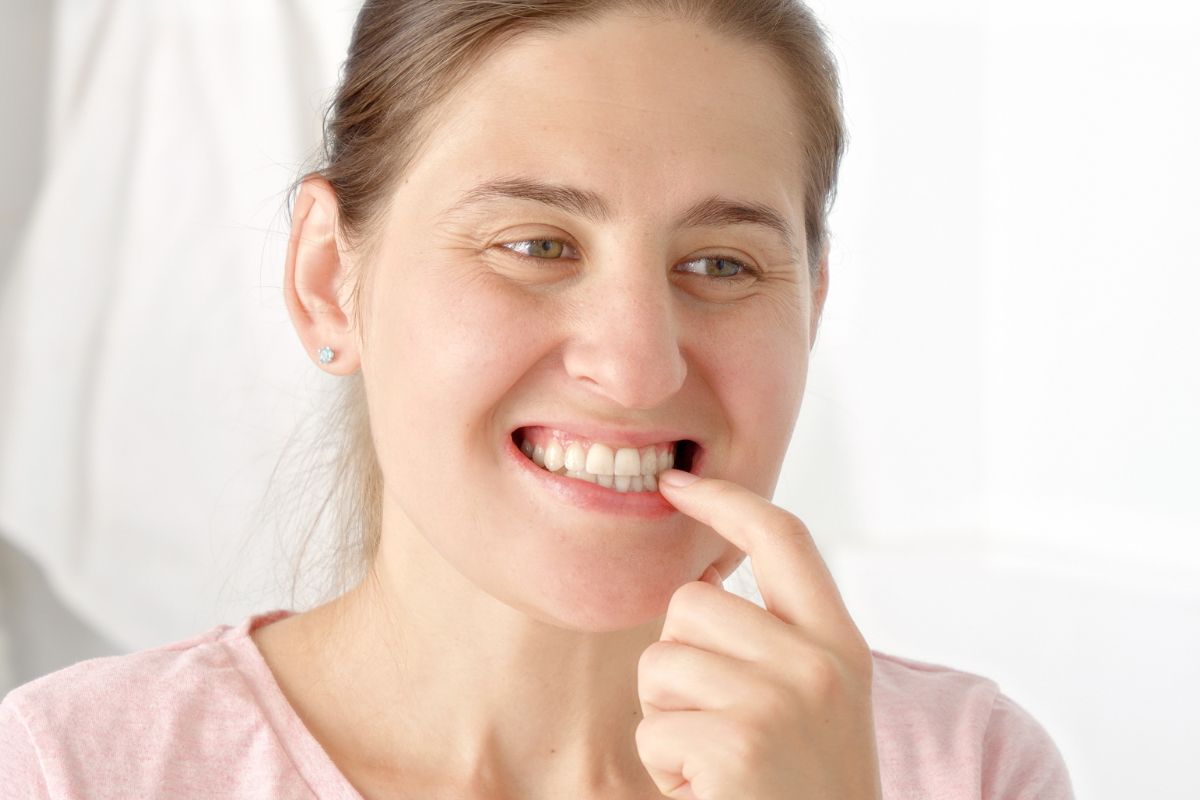
It is also important to avoid using sharp objects, fingernails, or other household items to dig food out. These can injure the gums or damage the teeth.
If you clean the area regularly but food continues to get trapped there, the issue may need more than a change in your cleaning routine.
When Should You See a Dentist?
You do not necessarily need to worry every time food gets caught between your teeth. However, recurring food trapping deserves more attention when it is accompanied by other changes.
Consider scheduling a dental examination if:
- Food gets stuck between the same two teeth frequently.
- The problem started recently.
- Your gums bleed or swell in that area.
- The tooth feels sensitive.
- You have pain when biting or chewing.
- You notice a rough, chipped, or broken area.
- You have an older filling near the area.
- Floss suddenly feels different between the teeth.
- You cannot keep the area clean despite regular flossing.
A dental examination can help determine whether the issue is related to the tooth, filling, gums, or spacing between the teeth.
How Can a Dentist Find the Cause?
The dentist will usually begin by examining the teeth and gums around the problem area. They may check the contact between the teeth and look for visible signs of decay, damage, changes in the gums, or problems with an existing filling.
Sometimes the cause cannot be seen just by looking at the teeth. In those situations, dental X-rays may be recommended to check areas such as the spaces between teeth.
Treatment depends entirely on what is causing the food to become trapped. A cavity may need to be treated, while a damaged filling may need to be repaired or replaced. If gum changes are contributing to the problem, the dentist may recommend ways to improve the health and cleanliness of the area.
The goal is not simply to keep removing food after every meal. It is to understand why the same area keeps trapping it in the first place.
When Recurring Food Trapping Needs Professional Attention
Sometimes the reason is straightforward, while other times it takes a closer examination to find the cause. A professional evaluation can be particularly useful when the problem has changed recently or is happening alongside other symptoms.
For patients in Jersey City and Hoboken, our dental practice provides examinations to help identify the cause of recurring food trapping and other changes affecting the teeth and gums. If you have noticed that the same area repeatedly catches food, contact us so the area can be evaluated and the appropriate next step can be discussed.
Keeping Food From Getting Stuck Between the Same Teeth
Food getting stuck between your teeth from time to time is not unusual. But when the same two teeth repeatedly catch food, it is worth noticing the pattern. A cavity, filling problem, gum changes, shifting teeth, or tooth damage may sometimes be responsible.
Keeping the area clean with regular brushing and interdental cleaning can help, but persistent food trapping shouldn’t be something you simply have to live with. If you are looking for a dentist in Jersey City who can determine why food keeps getting stuck between the same two teeth, a dental evaluation can help identify the underlying cause.
Keeping Your Teeth Comfortable and Easier to Clean
A small change in the way food moves between your teeth can sometimes be the first noticeable sign that something has changed in that area. Paying attention to recurring food trapping, along with symptoms such as bleeding, sensitivity, swelling, or pain, can help you address potential problems sooner. Our team can evaluate these concerns and help you understand what may be happening. Visit our dental office if the same area keeps trapping food despite your regular cleaning routine.
Frequently Asked Questions
Why does food keep getting stuck between the same two teeth?
Food may repeatedly get trapped because of a cavity, changes in tooth spacing, a worn or damaged filling, gum changes, shifting teeth, or damage to one of the teeth.
Can a cavity cause food to get stuck between teeth?
Yes. A cavity can change the shape of a tooth and create a space where food becomes trapped more easily. Decay between teeth can also be difficult to notice without a dental examination.
Is it bad if food gets stuck between my teeth every day?
Frequent food trapping can make the area harder to keep clean. If it happens every day, especially with bleeding, swelling, sensitivity, or pain, it is a good idea to have the area examined.
Can an old filling cause food to get stuck?
Yes. If a filling becomes worn, damaged, or changes the way the restored tooth contacts the neighboring tooth, food may begin collecting in that area.
Should I use something sharp to remove food from between my teeth?
No. Sharp objects can injure your gums or damage your teeth. Dental floss or an appropriate interdental cleaning tool is a safer option.
When should I see a dentist about food getting stuck?
Consider seeing a dentist when food repeatedly gets trapped in the same location, particularly if the problem is new or you also have pain, sensitivity, bleeding, swelling, or discomfort when chewing.