By Jersey City Dental | July 14, 2026
Braces are designed to move teeth gradually and precisely, but even the most carefully maintained braces can occasionally develop minor problems. One of the most common orthodontic emergencies occurs when the archwire slips out of a bracket, leaving patients wondering whether they should attempt to fix it themselves or seek professional help. While this situation can be uncomfortable, it does not always require immediate emergency care if handled correctly.
Knowing what to do and what to avoid can prevent additional damage to your braces while keeping your orthodontic treatment on schedule. However, it is equally important to recognize that putting a wire back into a bracket is only a temporary measure in certain situations. A professional evaluation is always the safest option.
At Jersey City Dental, our dental team regularly helps patients manage unexpected orthodontic issues while keeping their treatment progressing smoothly. The guidance below reflects the recommendations our dentists provide to patients every day. If you experience a loose or displaced braces wire, visit our dental office so we can evaluate the problem and recommend the safest solution for your smile.
According to the National Institute of Dental and Craniofacial Research (NIDCR), maintaining healthy teeth and gums during orthodontic treatment plays an essential role in achieving successful treatment outcomes. Regular professional monitoring also helps detect issues before they become larger problems.
Why Does a Braces Wire Come Out of the Bracket?
A braces wire can come out because of chewing hard foods, accidental impacts, worn elastic ligatures, or natural tooth movement during treatment. Although it is common, the cause should always be identified to prevent it from happening repeatedly.
As your teeth gradually shift into better alignment, the archwire remains under constant pressure. Occasionally, that pressure allows the wire to slide out of the final bracket or a bracket that has become slightly loose.
Other common causes include:
- Eating sticky candies or chewing ice
- Biting hard foods such as whole apples or nuts
- Sports-related facial injuries
- Broken elastic ties
- Loose orthodontic brackets
- Playing with the braces using your tongue or fingers
Even everyday activities can occasionally dislodge an orthodontic wire if proper care and caution aren’t exercised.
Fortunately, most loose wires are manageable until your orthodontist can examine them.
Can You Put a Braces Wire Back Yourself?
Yes, in certain situations, you may gently guide the wire back into the bracket as a temporary solution. However, you should never force the wire or continue if you experience pain, resistance, or notice a broken bracket.
Before attempting anything, wash your hands thoroughly and examine the braces under good lighting.
A temporary repositioning is generally appropriate only when:
- The bracket remains firmly attached to the tooth.
- The wire is simply resting outside the bracket.
- There is minimal discomfort.
- No part of the braces appears broken.
If the wire has bent significantly, snapped, or the bracket has detached from the tooth, avoid trying to repair it yourself. Instead, contact your orthodontic provider promptly.
Many patients seeking professional orthodontic treatment in Jersey City are surprised to learn that a loose wire rarely indicates the treatment has failed. More often, it simply requires a quick adjustment by an experienced orthodontic team.
Step-by-Step Guide to Putting the Braces Wire Back in the Bracket
If the wire has simply slipped out, you may be able to carefully reposition it using clean tools and gentle pressure. Stop immediately if the wire does not move easily or if you experience significant discomfort.
Step 1: Wash Your Hands
Clean hands reduce the risk of introducing bacteria into your mouth.
Step 2: Use Good Lighting
Stand in front of a well-lit mirror so you can clearly see the affected bracket.
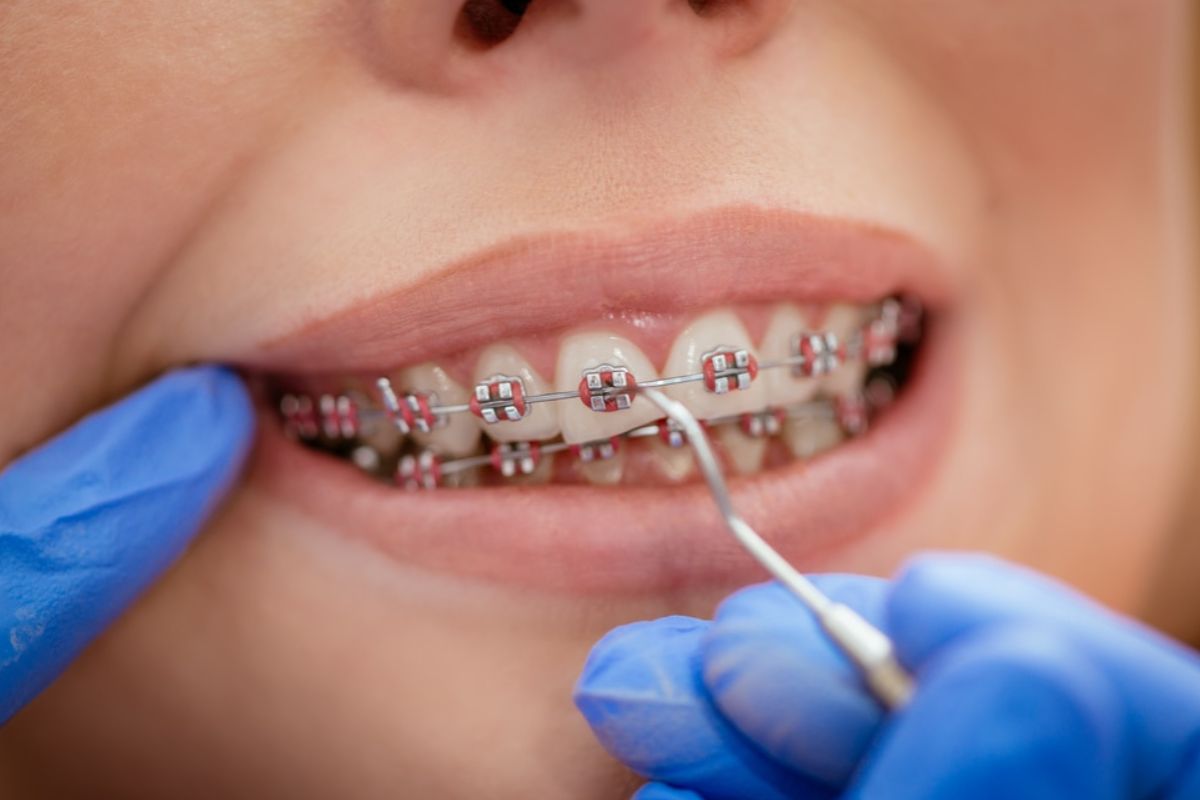
Step 3: Inspect the Braces
Determine whether:
- The bracket is still attached.
- The wire is intact.
- The elastic tie remains in place.
- The wire is merely outside the bracket slot.
Do not proceed if anything appears broken.
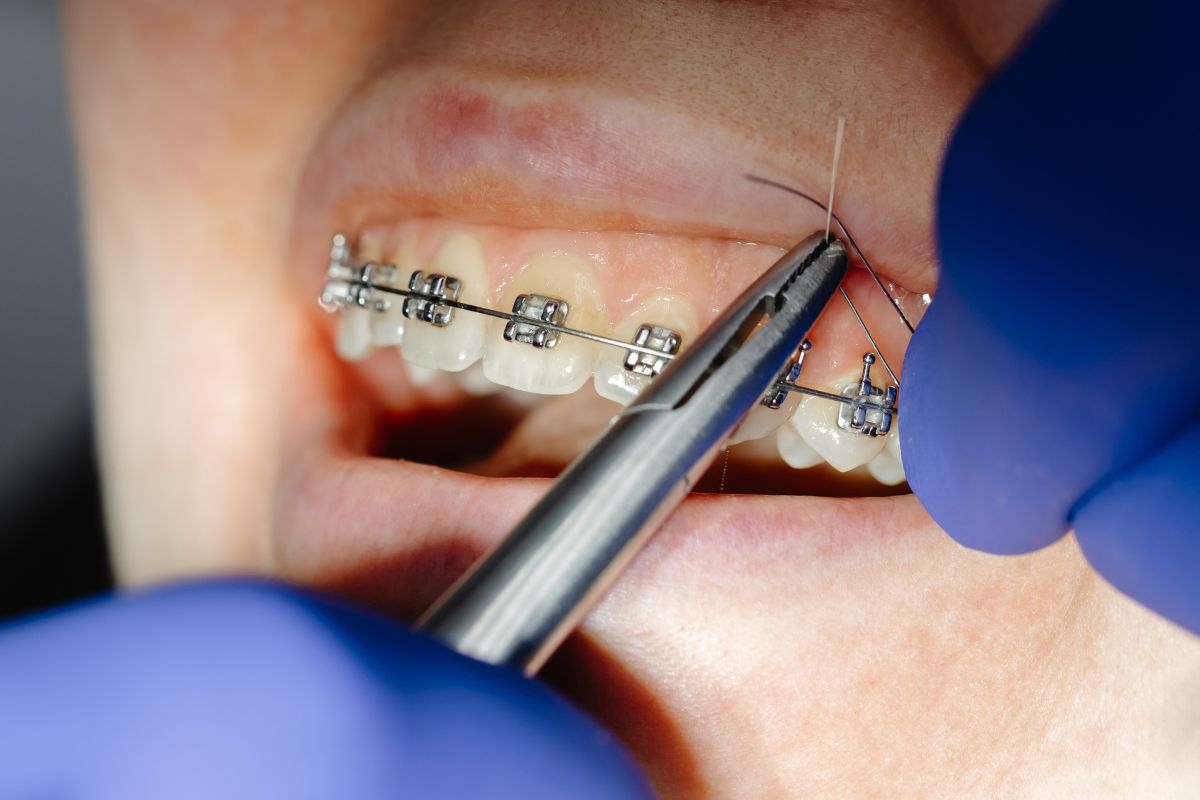
Step 4: Use Orthodontic Tweezers
Sterilized orthodontic tweezers are ideal for gently guiding the wire toward the bracket slot.
Avoid using sharp household objects, needles, or knives, which may damage both the wire and surrounding tissues.
Step 5: Carefully Guide the Wire Back
Using gentle pressure, slide the wire back into the bracket groove. Never force the wire.
If resistance occurs, stop immediately and arrange an orthodontic appointment.
Step 6: Check Your Comfort
Once repositioned:
- Bite down gently.
- Confirm the wire feels secure.
- Ensure it no longer pokes your cheeks.
- Apply orthodontic wax if mild irritation remains.
Remember that this should only be considered a temporary solution until your orthodontist verifies that everything is functioning correctly.
When Should You Avoid Putting the Wire Back Yourself?
You should not attempt to reposition a braces wire if the bracket is broken, the wire is bent or fractured, or you are experiencing significant pain. In these situations, professional care is the safest option to prevent further damage and keep your treatment progressing properly.
While a loose wire may appear to be a minor inconvenience, certain orthodontic problems require immediate attention. Trying to fix them at home can delay treatment, damage the appliance, or even injure the soft tissues inside your mouth.
Avoid attempting a repair if you notice any of the following:
- The bracket has detached from the tooth.
- The wire is bent, twisted, or broken.
- The wire repeatedly slips out after being repositioned.
- You experience sharp pain while moving the wire.
- A bracket has shifted significantly from its original position.
- Your teeth suddenly feel unusually loose.
- The wire is poking deeply into your cheek or gums despite using orthodontic wax.
In these cases, scheduling an appointment is far safer than attempting multiple adjustments yourself. Patients receiving professional orthodontic treatment often find that a simple in-office adjustment resolves the issue within minutes while protecting the progress already made.
Common Mistakes That Can Make the Problem Worse
Many braces emergencies become more complicated because patients unknowingly use excessive force or improper tools. Knowing what not to do is just as important as knowing the correct steps.
Avoid these common mistakes:
- Pulling the wire with excessive force.
- Cutting the wire without professional guidance.
- Using scissors, pins, or other sharp household tools.
- Ignoring persistent irritation for several days.
- Skipping your scheduled orthodontic visit because the wire “feels okay.”
- Continuing to eat hard, crunchy, or sticky foods after the wire has come loose.
Remember that braces work by applying carefully controlled forces. Even a small change in wire position can influence how your teeth move, making professional evaluation essential after any orthodontic emergency.
Temporary Home Care Until Your Appointment
If you cannot be seen immediately, several simple measures can help keep you comfortable while protecting your braces. These temporary solutions are not substitutes for professional care but may reduce irritation until your appointment.
Follow these recommendations:
- Cover any sharp wire with orthodontic wax.
- Rinse with warm salt water if your cheeks or gums become sore.
- Choose softer foods such as yogurt, soup, mashed potatoes, eggs, oatmeal, and smoothies.
- Brush gently around the affected bracket using a soft-bristled toothbrush.
- Continue flossing carefully to maintain healthy gums.
- Avoid chewing gum, caramel, popcorn, nuts, hard candy, and ice.
If discomfort increases, swelling develops, or the appliance becomes unstable, contact your orthodontic provider promptly rather than waiting for your next scheduled visit.
How Can You Prevent Braces Wires from Coming Loose?
Although not every orthodontic emergency can be prevented, good habits significantly reduce the likelihood of wires slipping out or brackets becoming damaged. Consistent care also helps your treatment stay on schedule.
Simple preventive measures include:
- Cut hard foods into bite-sized pieces.
- Avoid chewing ice, hard candy, popcorn kernels, and pens.
- Wear a mouthguard during sports and recreational activities.
- Brush and floss carefully around brackets every day.
- Keep all scheduled orthodontic adjustment appointments.
- Notify your orthodontist promptly if something feels loose instead of waiting several weeks.
These habits protect both your braces and your overall oral health throughout treatment.
Whether you’re heading to work, running errands, or going about your day, carrying orthodontic wax with you can be surprisingly helpful if a wire unexpectedly becomes uncomfortable.
Our Personalized Orthodontic Care can be Your Ideal Solution
Orthodontic emergencies can happen even when you take excellent care of your braces. The important thing is knowing when a temporary home solution is appropriate and when professional treatment is necessary. Our team carefully evaluates every orthodontic concern to ensure your braces continue moving your teeth safely, comfortably, and efficiently.
If a loose wire, broken bracket, or any other orthodontic issue is affecting your comfort, don’t wait for the problem to worsen. Visit our dental office for a personalized evaluation by our experienced team. We’ll identify the cause, make the necessary adjustments, and help keep your treatment progressing exactly as planned.
Book an Appointment for Expert Orthodontic Care
A braces wire that slips out of its bracket is often manageable temporarily, but it should never replace a professional examination. Prompt care helps prevent treatment delays, reduces the risk of additional damage, and ensures your braces continue working as intended.
If you’re experiencing a loose wire or another orthodontic concern, book an appointment with us today. We proudly serve patients across Jersey City and Hoboken, NJ, providing personalized orthodontic care tailored to each patient’s needs. Our experienced team will perform a thorough assessment, recommend the most appropriate treatment for your specific situation, and help you continue your orthodontic journey with confidence.